If you are currently trying to arrange care for a loved one, you have likely run into a confusing web of healthcare terminology. Terms like “home care,” “home health,” “personal care,” and “skilled nursing” are often used interchangeably, leaving families unsure of what kind of help they actually need.
Sorting through this overlapping language can feel overwhelming, but the distinction becomes much clearer when you look at who is providing the care and what tasks they are qualified to perform. Finding the right fit is simply a matter of balancing your loved one’s daily functional needs with their clinical medical requirements.
What Non-Medical Home Care Covers
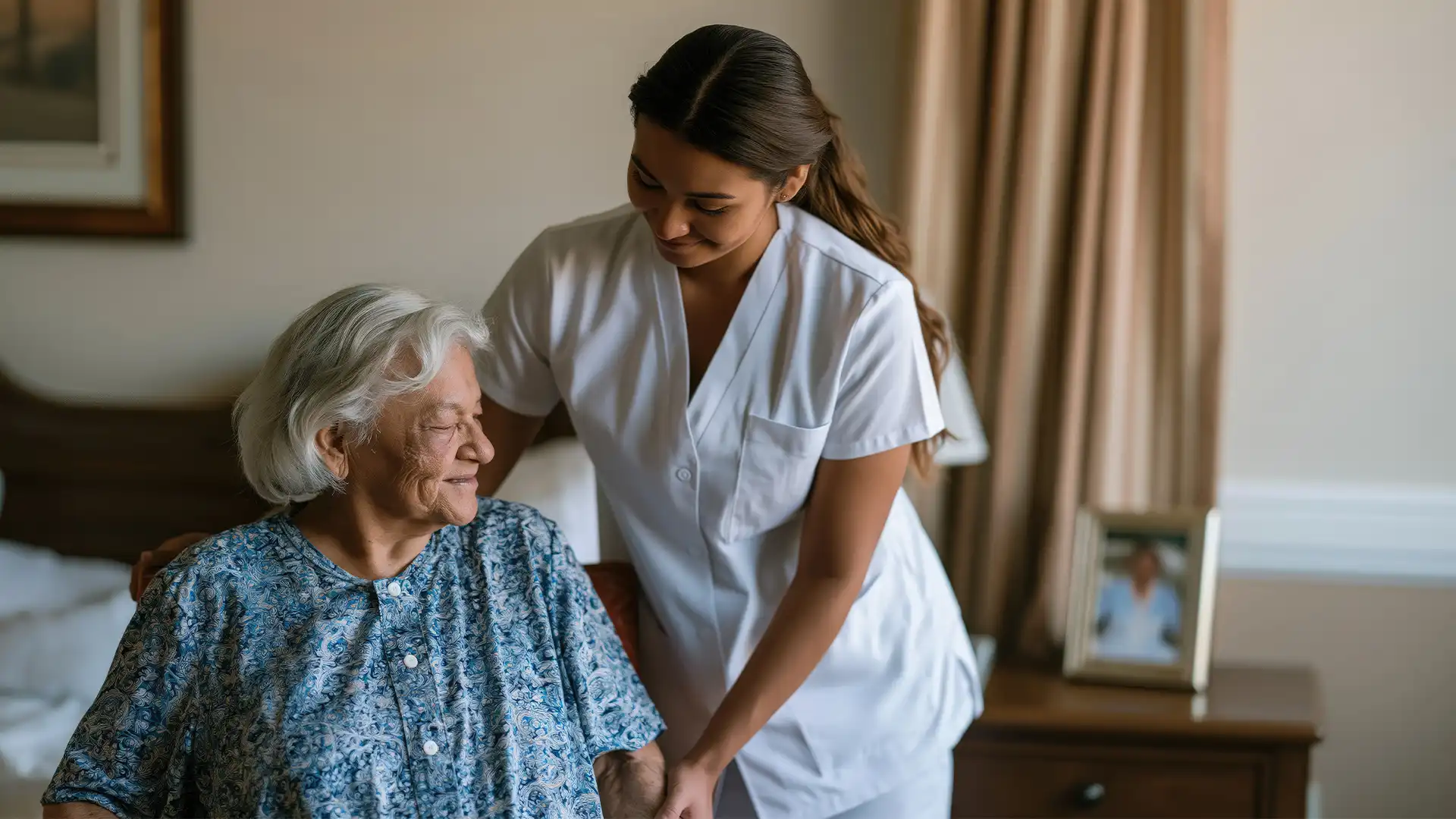
Non-medical home care – often referred to simply as personal or companion care – focuses on helping seniors with the daily activities required to live safely and comfortably at home. This type of care is provided by professional caregivers or home health aides who do not need a clinical license but are thoroughly trained in safety, mobility, and personal support.
The scope of non-medical in-home care generally includes:
- Personal Care: Hands-on assistance with bathing, dressing, grooming, toileting, and safely moving around the house.
- Household Support: Preparing nutritious meals, handling light housekeeping, washing laundry, and providing medication reminders so doses aren’t missed.
- Companionship: Social engagement, conversation, and activities that combat isolation and keep your loved one mentally active.
- Transportation: Driving to doctor appointments, picking up prescriptions, and assisting with grocery shopping or other errands.
What Medical Home Care Covers
Medical home care, frequently called private duty nursing or clinical home health, involves specialized medical treatment. This level of care must be delivered by a licensed professional, such as a Registered Nurse (RN) or a Licensed Practical Nurse (LPN), and is typically ordered by a physician.
Medical home care addresses complex clinical needs, including:
- Skilled Nursing Tasks: One-on-one nursing for complex medical needs, such as managing ventilators or feeding tubes, administering injections, monitoring specialized medications, and managing complex wounds.
- Physician Coordination: Working directly with your loved one’s doctors and healthcare providers to monitor symptoms, adjust care plans, and manage chronic conditions.
- Fragile Health Support: Offering continuous, highly specialized oversight for individuals with advanced, long-term illnesses or severe neurological conditions.
How to Tell Which Type Fits
To determine which model fits your current situation, it helps to use a simple framework based on your loved one’s primary challenges:
- Daily Support vs. Clinical Treatment: Does your loved one primarily need help getting out of bed, making meals, and staying safe from falls? If so, non-medical personal care is the right fit. Do they require complex medical procedures, wound changes, or clinical monitoring? That requires medical home care.
- Medication Management: If they just need someone to hand them a pill organizer and remind them to take their tablets, a non-medical caregiver is able to do that. If they need intravenous (IV) medications or precise clinical adjustments based on daily vitals, then they need a licensed nurse.
- Family Support and Shifting Needs: Factor in how much care your family can realistically provide yourself. Keep in mind that these needs are rarely permanent fixtures; health statuses naturally shift over time, meaning a senior who starts with companionship may eventually need clinical oversight.
When Families Need Both
It is incredibly common for families to realize that their loved one doesn’t fit neatly into just one category. A senior managing a complex, long-term medical condition often needs skilled nursing for their clinical treatments and a personal caregiver to help them bathe, eat, and keep the house clean.
Combining non-medical and medical care creates a seamless safety net. When a single provider coordinates both service levels, it reduces gaps in care, prevents communication breakdowns between different agencies, and eliminates confusion for the senior. As your loved one recovers from an illness or as a chronic condition progresses, the blend of care can be easily adjusted to match their exact reality.
Get the Right Mix of Care With Avid
You don’t have to guess which type of support is right for your family. At Avid Health at Home, we are here to help you clear up the confusion and design a strategy that covers every angle.
Because Avid offers both compassionate personal care and highly skilled private duty nursing, we can build a truly personalized plan centered around the whole person. We work closely with families and your existing healthcare partners to coordinate every detail, ensuring smooth transitions and absolute peace of mind. Contact Avid Health at Home today to schedule a comprehensive care assessment, and let us help you find the perfect mix of care for your loved one.